Khrushchyovki: how the country got separate flats
In the late 1950s the USSR began mass standardized housing — millions of families moved from communal flats into separate apartments for the first time.
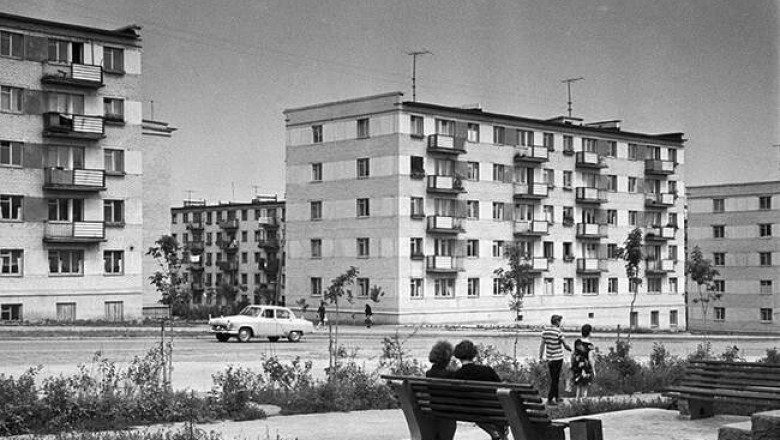
In the late 1950s the USSR began mass standardized housing. The flats were cramped, but millions of families moved from communal apartments into their own separate homes for the first time.
A flat of one's own, instead of a room in a communal apartment
"Khrushchyovki" is the popular name for the cheap, standardized apartment blocks that the USSR began building en masse from the late 1950s. The name comes from Nikita Khrushchev, under whom the programme was launched.
The flats in them were small and modest. But they had one decisive advantage: a family received a separate apartment — with its own front door, its own kitchen and bathroom — instead of a single room in a communal flat, where kitchen and bathroom were shared with strangers. For tens of millions of people this amounted to a real change in the way they lived.
Where the housing problem came from
By the mid-1950s housing was one of the country's most acute problems. The war had destroyed an enormous amount of housing, the cities were overcrowded, and the population was growing fast.
How did people live? Very cramped:
- In communal apartments — several families in one flat, each in its own room, sharing the kitchen and bathroom.
- In barracks, dormitories, basements and tiny rooms.
For most families a separate flat of their own was an unreachable dream. Housing for millions had to be built quickly and cheaply.
The solution: cheap, fast, standardized
In 1955 a decree rejected "architectural excesses". In place of the expensive, ornate buildings of the Stalin era came simple, functional and as-cheap-as-possible construction.
The central idea was industrialized, standardized building — houses assembled from ready-made parts according to standard designs:
- Panel buildings — made from large concrete panels manufactured in a factory and quickly assembled on site.
- Brick buildings, built to the same standard series.
The blocks were usually four or five storeys. Five was not chosen by chance: under the norms of the time, a building up to five floors could be put up without a lift — a serious saving. Often there was neither a lift nor a rubbish chute.
What the flats were like
The economy showed in everything. The ceilings were low — about 2.5 metres. The kitchen was tiny, roughly 5–6 square metres. The bathroom was often combined — bath and toilet in one small room. The walls were thin, and sound carried easily between flats. The rooms were small, and sometimes you had to walk through one to reach another.
And yet it was your own flat. After a room in a communal apartment, a separate home — cramped as it was — felt like an enormous step forward.
The scale: tens of millions of new residents
Construction was astonishingly fast. A panel building could be assembled in a matter of weeks, and whole districts went up almost before your eyes.
The model and symbol of the new construction was the Moscow district of Novye Cheryomushki, where the experiments with standardized housing began in the late 1950s. Soon similar neighbourhoods appeared all over the country. Tens of millions of people moved into new flats — it was one of the largest housing programmes in history.
"Temporary" housing that stayed for good
Curiously, khrushchyovki were conceived as housing for a limited time. They were designed for about 25 years, on the assumption that they would later be replaced with something better once abundance arrived.
It turned out otherwise: many khrushchyovki are still standing today, far longer than they were meant to last. In recent decades, in many cities — especially Moscow — some of them have been demolished and replaced with new housing.
How it changed life and culture
Moving into a separate flat changed the everyday life of millions: people gained private space, their own kitchen, the chance to live as a family apart from neighbours.
But mass standardized construction had a flip side — sameness. Buildings and flats in different cities looked like twins. The famous film "The Irony of Fate" captured this trait of the era precisely: the hero ends up by mistake in someone else's flat in another city — and does not realize it at first, because the building, the entrance and the furnishings look exactly like his own.
Two sides
How to judge khrushchyovki depends on what you compare them with.
On the one hand, it was a humane breakthrough: in a short time the country gave millions of families a home of their own and solved what had seemed an impossible problem. For people who had grown up in communal flats and barracks, it was an enormous boon.
On the other hand, critics rightly point out: the flats were cramped, the walls thin, the buildings monotonous, and the "temporary" housing became permanent. Quality and beauty were largely sacrificed to speed and quantity.
Both assessments are true at once — and this project shows both, not just one.
Related
- Shortages and queues — why people waited years for a flat and for goods.
- Joseph Stalin — mass housing was a break from the costly architecture of the Stalin era.
- The kommunalka: life behind a shared door — the world the country left for the five-story blocks.
Sources
The facts in this article can be verified against these sources:
- Wikipedia, "Khrushchevka": https://en.wikipedia.org/wiki/Khrushchevka
- ArchDaily, "Why Moscow's Massacre of Mass Housing Is a Huge Mistake": https://www.archdaily.com/868981/why-moscows-massacre-of-mass-housing-is-a-huge-mistake
- Philipp Meuser, "Towards a Typology of Soviet Mass Housing: Prefabrication in the USSR 1955–1991" (academic work): https://www.academia.edu/64944776/Towards_a_Typology_of_Soviet_Mass_Housing_Prefabrication_in_the_USSR
- Euromaidan Press (based on Ukrainska Pravda), "Khrushchovka apartments: the French dream that became a Soviet reality": https://euromaidanpress.com/2018/01/05/khrushchyovky-the-french-dream-that-became-a-soviet-reality/
Where assessments differ (a genuine boon, or a forced compromise of modest quality), we give both points of view.