The October Revolution of 1917: how the Bolsheviks took power
In October 1917 the Bolsheviks overthrew the Provisional Government and created the world's first socialist state. How it really happened, why the storming of the Winter Palace is a myth, and whether it was a revolution or a coup.
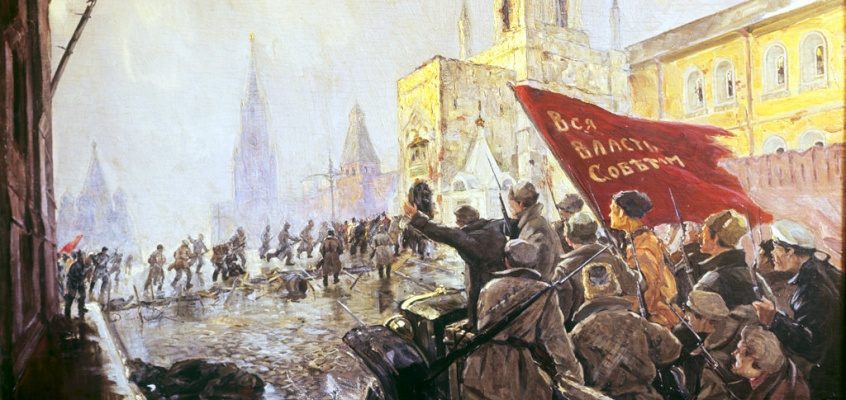
What happened in October 1917
The October Revolution was the seizure of power by the Bolsheviks, led by Lenin, which took place in Petrograd on 7 November (25 October, Old Style) 1917. The Provisional Government was overthrown and power passed to the Soviets — in reality, to the Bolshevik party. Thus arose the world's first state to declare itself socialist.
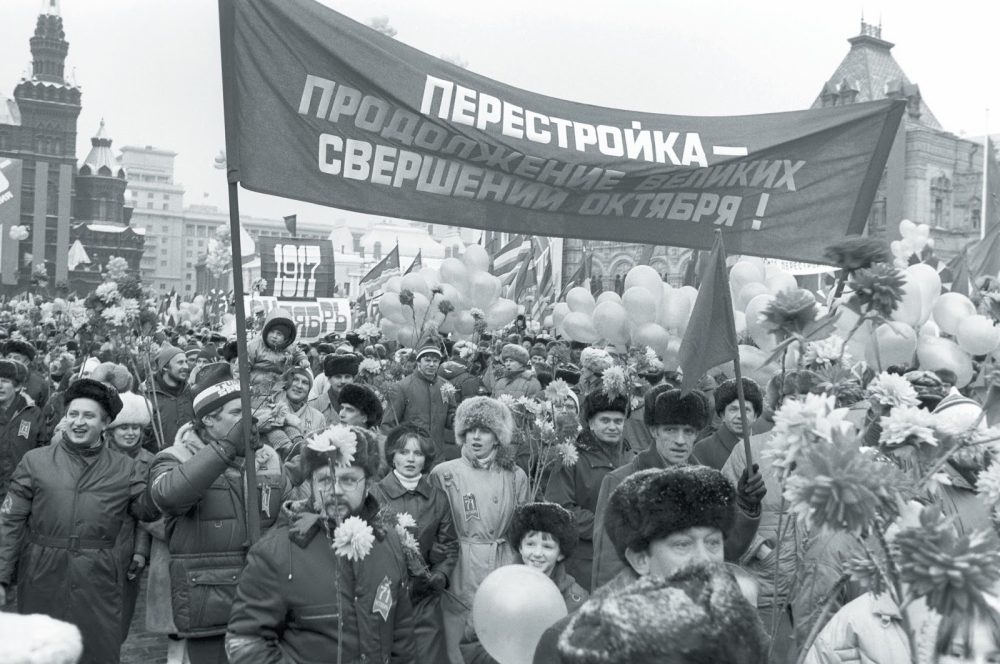
The uprising in the capital itself passed almost without bloodshed. But the event proved one of the most significant of the 20th century: it changed Russia and the world — and at the same time plunged the country into civil war, violence and years of suffering. This revolution has many names: the "Great October Socialist Revolution" in the Soviet tradition — and the "October coup" among its critics.
Why "October," but 7 November
The mismatch of dates can be confusing. It comes down to the calendar: until 1918 Russia lived by the old, Julian calendar, which lagged 13 days behind the European one. So "25 October" in the old style is "7 November" in the new. In this article we give both dates.
First came the February Revolution
October was preceded by February. In the winter of 1917, weariness with an unsuccessful war, a shortage of bread and general discontent erupted into a spontaneous uprising — the February Revolution. When the authorities ordered the revolt suppressed by force, the soldiers began going over to the rebels en masse.
The outcome was stunning: Tsar Nicholas II abdicated (2 March), and his brother, Grand Duke Michael, declined the throne. So the Romanov monarchy came to an end. Power was taken by the Provisional Government — at first made up of liberal ministers, with a single socialist, Alexander Kerensky, who would soon become its head.
Dual power
But the Provisional Government at once had a rival — the Petrograd Soviet of Workers' and Soldiers' Deputies. The Soviets were elected "from below," in factories and military units, and were dominated by socialists. Formally the government ruled "by agreement" with the Soviet, but in reality the two powers constantly clashed. This period was called dual power.
The time was full of contradictions. With the fall of the old regime the country gained unprecedented freedoms: freedom of the press, of assembly, of any party. But at the same time chaos grew — no one could actually restore order.
Why the Provisional Government was losing power
The government made several fatal mistakes.
Above all, it continued the unpopular war. In the summer of 1917 it backed a major offensive at the front, which ended in a heavy defeat: many units simply refused to fight. The decision on land, so awaited by the peasants, was also dragged out.
Against this background the influence of the Bolsheviks grew, with their simple, clear slogans: "Peace, land, and bread!" and "All power to the Soviets!" The membership of their party rose from 24,000 in February to about 200,000 by September.
The July Days and Lenin in hiding
In July a spontaneous armed uprising broke out in Petrograd. The government used force and ordered Lenin's arrest. He had to go underground and flee to Finland, changing his appearance. Bolsheviks were arrested and workers disarmed. Kerensky took charge of the government.
It seemed the Bolsheviks were beaten. But the next twist changed everything.
The Kornilov affair
In August 1917 the commander-in-chief of the army, General Lavr Kornilov, sent troops towards Petrograd — it looked like an attempt at a military coup. Kerensky declared him a traitor and, to defend the capital, turned to the Soviets for help and armed the Bolshevik detachments — the Red Guards.
The revolt collapsed: the soldiers sent in had no wish to fight their own people. But the consequences proved decisive. The Bolsheviks, so recently crushed, were back on the legal stage — now with weapons and a reputation as defenders of the revolution. This was a turning point on the road to October.
Trotsky, the Military-Revolutionary Committee and Smolny
By the autumn the Bolsheviks had won majorities in the Soviets of Petrograd and Moscow. Leon Trotsky became chairman of the Petrograd Soviet. Within the Soviet a Military-Revolutionary Committee (MRC) was created, headed by Trotsky — it was this committee that prepared the seizure of power. The headquarters of the uprising was Smolny — a former school for noble girls, which also housed the Petrograd Soviet itself.
The preparations were barely concealed. The MRC's plans were reported in the newspapers; two prominent Bolsheviks, Kamenev and Zinoviev, actually opposed the uprising and effectively exposed it. Foreign observers were astonished that the government did nothing in the face of an obvious threat.
The trigger
The push came from the government's own actions. It announced that the pro-Bolshevik Petrograd garrison would be moved out of the city. The Bolsheviks took this as an attempt to deprive them of their support — and decided to strike first.
Kerensky came to his senses too late: on 22–24 October he ordered the arrest of the MRC, tried to shut down the Bolshevik newspapers and to send the cruiser Aurora out of the port. But it was too late — the Aurora already obeyed the rebels. Many historians therefore hold that the revolution was, in effect, provoked by Kerensky's own actions rather than by a bold order from Lenin or Trotsky.
25 October: the uprising
Early in the morning of 25 October (7 November), the armed workers of the Red Guard, together with soldiers and sailors, began occupying the city's key points: railway stations, the telephone exchange, the telegraph, the State Bank, power stations, bridges. There was almost no resistance — the takeover proceeded in a matter-of-fact, almost bloodless way.
That same day Lenin returned from hiding to Smolny. He wrote a proclamation, "To the Citizens of Russia!", declaring the Provisional Government deposed, and it was sent by telegraph across the country. The idea was simple: to present the Congress of Soviets, opening that day, with a done deal.
The storming of the Winter Palace — and the myth
The government's last stronghold was the Winter Palace. It was defended by about three thousand people — junkers (military cadets), cossacks, officers and a women's battalion. The assault dragged on: the Bolsheviks could not even immediately find working artillery.
In the evening the signal to begin was a blank shot from the cruiser Aurora. The Red Guards surrounded the palace and, in the early hours of 26 October, got inside; the remaining ministers were arrested. Kerensky himself was no longer in the capital — that very morning he had left Petrograd by car, hoping to bring troops from the front (he did not succeed). It all passed almost without bloodshed.
And now the important part. The famous heroic storming of the Winter Palace, with crowds of fighters clambering over the gates, is a myth. That image was created later: a mass theatrical spectacle in 1920 (watched by about 100,000 people) and Sergei Eisenstein's film "October" (1928). In reality it all happened at night and far more prosaically — witnesses compared it to a "changing of the guard." Incidentally, during the taking of the palace the famous wine cellar suffered: red wine spilling into the streets gave rise to legends that blood had flowed there. The real blood would be spilled later.
The Second Congress of Soviets and the first decrees
The uprising was timed to the opening of the Second All-Russian Congress of Soviets. The Bolsheviks, together with the Left SRs, held a majority there. The Mensheviks and the right SRs walked out in protest at the coup — and by doing so left the Congress, and hence the new government, in Bolshevik hands.
The Congress approved the transfer of power to the Soviets and elected Lenin head of the government — the Council of People's Commissars. Two key decrees were passed at once: the Decree on Peace (to begin negotiations to leave the war) and the Decree on Land (to transfer the land of the landowners and the church to the peasants). The banks were nationalized, and workers' control was introduced in the factories. The slogan "Peace, land, and bread!" was turning into real decrees.
What came next
The Bolsheviks held on to power by force. In the elections to the Constituent Assembly (November 1917) they won only about a quarter of the vote, losing to the SRs — and when the assembly refused to submit, Lenin dissolved it the very next day, in January 1918. In March 1918 Russia left the world war by signing the harsh Treaty of Brest-Litovsk. The only permitted party remained the Bolsheviks, who now called themselves communists. In the summer of 1918 the former Tsar and his family were shot. And ahead lay the Civil War.
Revolution or coup?
A long-standing debate surrounds October, and we show both sides.
In the Soviet tradition it was the "Great October Socialist Revolution" — an uprising of workers and soldiers that opened a new era. Critics, however, call what happened a coup: a small but well-organized party seized the capital's key points using armed detachments. Power was taken formally "in the name of the Soviets," but in reality this was precisely a Bolshevik revolution.
Both assessments rest on real facts. One thing is beyond dispute: October was a turning point in world history, its consequences echoing through the whole 20th century — and at the same time it plunged Russia into civil war and decades of upheaval. We do not choose one interpretation for the reader.
Frequently asked questions
When did the October Revolution take place? On 7 November 1917 by the new style (25 October by the old). Because of the difference in calendars, the event is "October" by date but falls in November.
Who were the Bolsheviks? The radical wing of the Russian Social Democrats, led by Lenin, who called for power to the Soviets and a socialist revolution. Later they became the Communist Party.
Was it a revolution or a coup? Historians disagree. In the Soviet tradition it was a great revolution; critics call it a coup by a small, organized party. Both sides rest on facts.
How did it all end? The Bolsheviks held on to power, dissolved the elected Constituent Assembly, took Russia out of the world war and created a one-party state — the future USSR. The Civil War began.
Related
- Vladimir Lenin — the leader of the revolution and first head of the Soviet state.
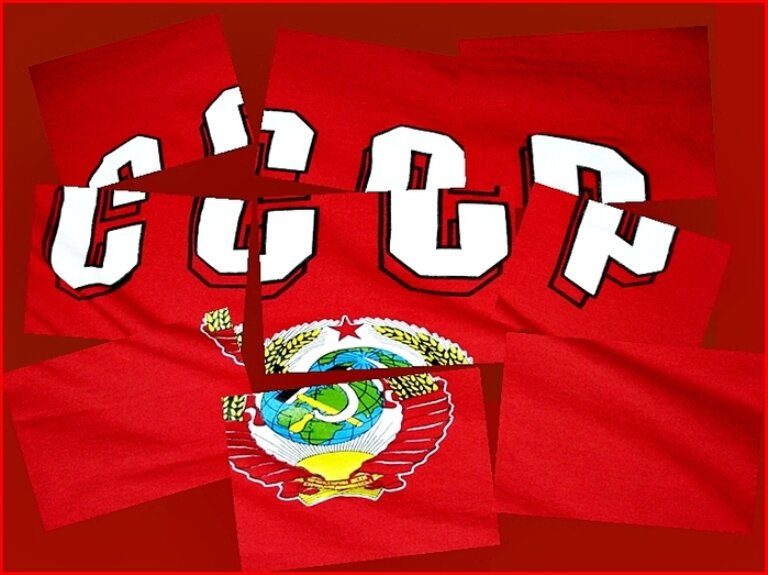
- The founding of the USSR (1922) — the state that grew out of October.
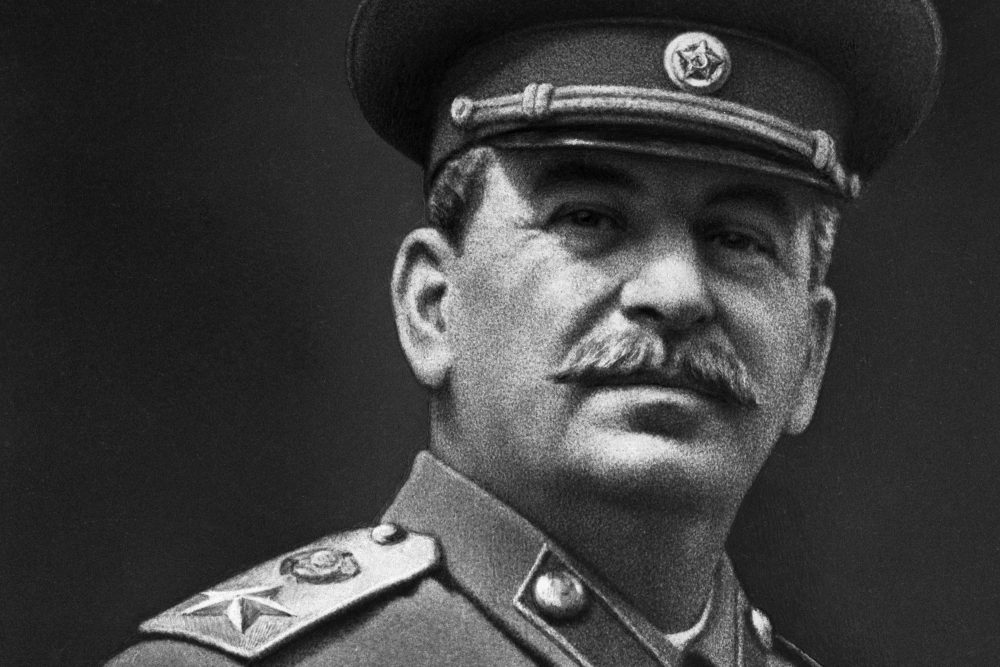
- Joseph Stalin — who came to power after Lenin.
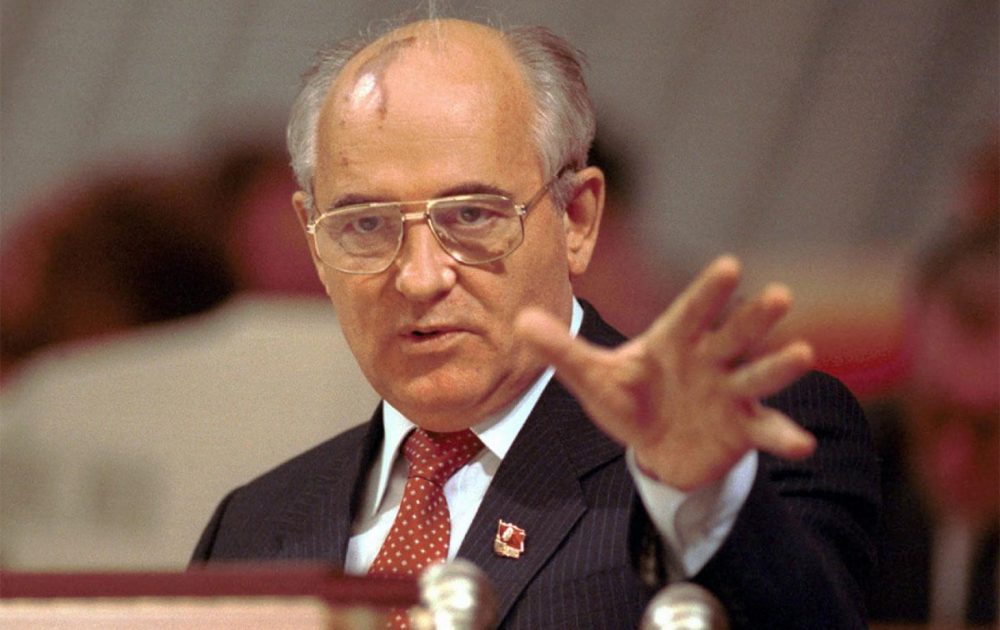
- The dissolution of the USSR (1991) — how the story of the state born in 1917 ended.
- The Russian Revolution of 1917: a full overview — the whole year in one picture, from February to the Civil War.
- The hammer and sickle: the USSR's main symbol — the sign born of the revolution.
Sources
The facts in this article can be verified against authoritative sources:
- Encyclopædia Britannica, "Russian Provisional Government": https://www.britannica.com/topic/Russian-Provisional-Government
- Wikipedia, "October Revolution": https://en.wikipedia.org/wiki/October_Revolution
- United States Holocaust Memorial Museum, "The Russian Revolution, 1917": https://encyclopedia.ushmm.org/content/en/article/the-russian-revolution-1917
- World History Encyclopedia, "Bolshevik Revolution": https://www.worldhistory.org/Bolshevik_Revolution/
- Russia Beyond, "The fall of the Winter Palace": https://www.rbth.com/history/326637-fall-of-winter-palace-how-1917
- Alpha History, "The October Revolution": https://alphahistory.com/russianrevolution/october-revolution/
Where the data are contested (revolution or coup, the details of the storming of the Winter Palace), we give different positions rather than a single one.