Sergei Korolev: the chief designer of the Soviet space programme
The man who put the USSR into space first. He survived Stalin's camps, launched the first satellite and Gagarin — yet during his life his very name was a secret.
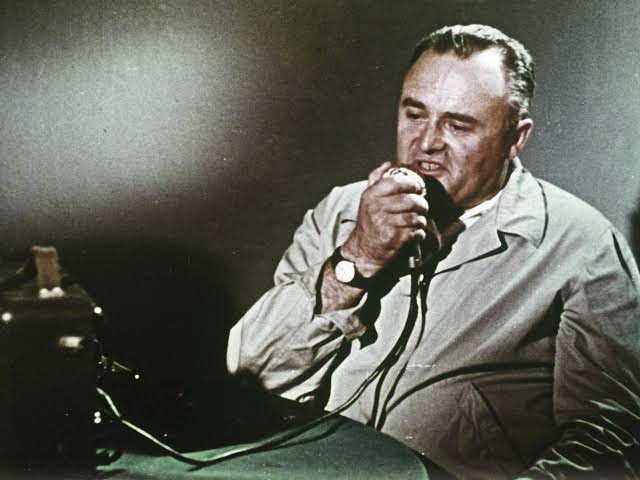
The Chief Designer
Sergei Pavlovich Korolev was the man who put the USSR into space first. He was the Chief Designer of the Soviet space programme: under his leadership the first satellite was launched and the first human was sent into space. But during his lifetime his name was a state secret — the country only learned of him after his death.
Early years
Korolev was born on 12 January 1907 in Zhytomyr (now in Ukraine), into the family of a teacher. From childhood he was fascinated by aviation, and at 17 he designed his first glider. He later studied under the famous aircraft designer Andrey Tupolev and earned an engineering degree. In time rocketry captured him: in 1931 he took part in founding GIRD — one of the first Soviet groups for the study of rocket motion — and in 1933 the group launched the first Soviet liquid-fuel rocket.
Arrest and the Gulag
In 1938, at the height of the Great Terror, Korolev was arrested on false charges. He was tortured to extract a confession and sent to the camps. He passed through a transit by the Trans-Siberian railway, a prison ship at Magadan and about a year in the Kolyma gold mines, one of the most dreaded parts of the Gulag. The injuries and ruined health he suffered there would later play a fatal role.
Later Stalin came to realize that engineers were needed for the coming war, and such specialists were put to use in the "sharashkas" — prison design bureaus. At the request of Tupolev, himself a prisoner, Korolev joined his bureau. He was only released in 1944. So the man who opened the road to space for humanity nearly perished in Stalin's camps.
The road to space
After the war Korolev studied captured German V-2 rockets and led the development of Soviet ballistic missiles. His great creation was the R-7 rocket — the world's first intercontinental ballistic missile. It was the R-7 that launched into space:
- Sputnik 1 (4 October 1957) — the first artificial satellite of the Earth;
- Sputnik 2 with the dog Laika — the first living creature in orbit;
- robotic probes to the Moon — the first object to reach the Moon, and the first images of its far side;
- the Vostok spacecraft with Yuri Gagarin (12 April 1961) — the first human in space;
- Vostok 6 with Valentina Tereshkova (1963) — the first woman in space;
- Voskhod 2, during whose flight Alexei Leonov made the first spacewalk (1965).
Korolev joined the Communist Party only after Stalin's death in 1953.
Secrecy and death
Korolev's name was kept secret — officially he was simply "the Chief Designer." This is thought to have been done to protect him from foreign intelligence services. He was working on the huge N-1 lunar rocket, dreaming of sending a human to the Moon, but did not live to see it: on 14 January 1966 Korolev died on the operating table. Both illness and the health broken in the camps took their toll.
Only after his death did the country learn the name of the man behind its space triumphs. He was buried in the Kremlin wall. A city near Moscow, craters on the Moon and Mars, and an asteroid were named in his honour. Korolev is often compared to his American "rival," Wernher von Braun.
Related
- Sputnik 1: the start of the space age — his first triumph.
- Yuri Gagarin: the first human in space — the great flight he prepared.
- Valentina Tereshkova: the first woman in space — another of his records.
- Joseph Stalin — the repression that the designer himself lived through.
- The Gulag: an archipelago of forced labor — the system he survived on his way to space.
- Laika: the first living creature in orbit — Sputnik 2, built by his bureau in four weeks.
Sources
The facts in this article can be verified against authoritative sources:
- NASA, "Sergei P. Korolev": https://www.nasa.gov/history/sputnik/korolev.html
- Encyclopædia Britannica, "Sergei Korolev": https://www.britannica.com/biography/Sergei-Korolev
- European Space Agency (ESA), "Sergei Korolev: Father of the Soviet Union's success in space": https://www.esa.int/About_Us/50_years_of_ESA/50_years_of_humans_in_space/Sergei_Korolev_Father_of_the_Soviet_Union_s_success_in_space
- Wikipedia, "Sergei Korolev": https://en.wikipedia.org/wiki/Sergei_Korolev