Leonid Brezhnev: the era of stagnation, détente and Afghanistan
Brezhnev ruled the USSR for 18 years — longer than anyone but Stalin. The peak of Soviet power and a "golden stability" to some, stagnation and the roots of collapse to others. An honest portrait of an era.
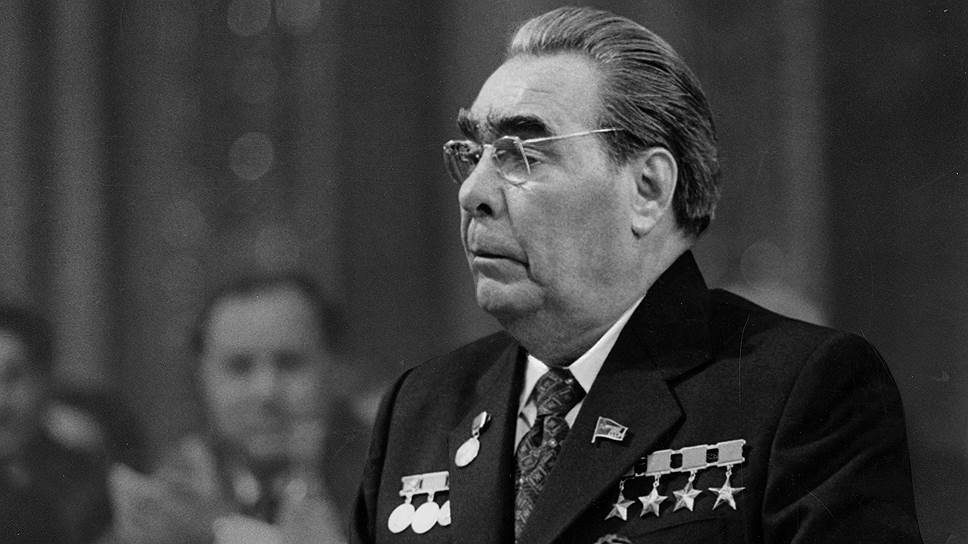
Who Brezhnev was
Leonid Brezhnev led the Soviet Union from 1964 to 1982 — eighteen years, longer than anyone except Stalin. Under him the USSR reached the peak of its external power: nuclear parity with the United States, détente, recognized superpower status. And under him the economy began to stall, and the country aged along with its leadership. The era would later be called the "era of stagnation."
Brezhnev is a rare case where people remember the very same years in opposite ways: for some they were the best, calmest years of the USSR; for others, wasted time that predetermined the collapse. Let us look at both sides honestly.
From a workers' family
Leonid Ilyich Brezhnev was born on 19 December 1906 in Kamenskoye (now Kamianske, Ukraine), into the family of a steelworker. He followed his father's path: trained as a metallurgical engineer and worked at a plant. He joined the party around 1929–1931 and began climbing its ladder — for the young promotees of that generation the way up had been cleared, among other things, by the Great Terror, which had mown down the older cadres.
In the war Brezhnev served as a political officer at the front and rose to major general; he took part in the fighting on the "Malaya Zemlya" bridgehead near Novorossiysk. Decades later this episode would be inflated to absurdity: for memoirs ghostwritten in his name (including the book "Malaya Zemlya") the General Secretary would receive the Lenin Prize for Literature.
The ascent
After the war Brezhnev headed the party organizations of Moldova and Kazakhstan — where he oversaw Khrushchev's Virgin Lands campaign. He was Khrushchev's man and rose with him; by 1960 he held the post of formal head of state — chairman of the Presidium of the Supreme Soviet.
And in October 1964 the pupil unseated the teacher: Brezhnev was one of the chief organizers of the plot that forced Khrushchev into retirement, and he took over the party (from 1966 with the title of General Secretary, unused since Stalin's day).
A quiet consolidation of power
At first the leadership was collective: Brezhnev ran the party, Kosygin the government, Podgorny the state. But Brezhnev, a master of apparatus politics, calmly and bloodlessly gathered power into his own hands: by the early 1970s he was the undisputed first man, and in 1977, retiring Podgorny, he became the first person in Soviet history to combine the leadership of the party with the office of head of state.
Unlike Khrushchev he did not act rashly and consulted his colleagues, and the apparatus received what it craved most — "stability of cadres": officials sat in their posts for decades. This bought Brezhnev loyalty — and at the same time froze the system: at the top a gerontocracy, the rule of old men, gradually took shape.
The economy: from reform to stagnation
In 1965 Premier Kosygin tried to revive the planned economy by giving enterprises more independence. But after the fright of Prague in 1968 the reforms were shelved: any change now seemed dangerous. The economy kept growing by inertia, ever more slowly: without competition there were no incentives, quality suffered, innovations struggled to take hold.
The failure was masked by petrodollars: in the 1970s oil prices soared, and hard-currency earnings paid for grain and goods from abroad. Military spending, meanwhile, grew faster than everything else — the superpower was carrying the arms race, the army and aid to allies across the globe. Padding of figures, connections ("blat") and corruption flourished. The word "stagnation" would appear later, under Gorbachev — but it describes precisely these years.
Life under Brezhnev
And yet for millions of people the Brezhnev years were the most comfortable and peaceful in Soviet history. Wages grew, jobs were guaranteed, flats — albeit after long waits — were provided free, televisions and refrigerators arrived in homes, holidays meant the seaside or the dacha. There was no mass terror: no one was shot any longer for a joke about Brezhnev (though it was still wise to watch whom you told it to).
The reverse side was the perpetual shortages and queues: people had money, but good things were hard to buy with it. This "stability without abundance" was the essence of Brezhnev's social contract: loyalty in exchange for a calm, predictable life.
Tanks against the Prague Spring
In 1968 Czechoslovakia tried to build "socialism with a human face" — with real freedoms. In August Brezhnev answered with tanks: about 250,000 Warsaw Pact troops entered the country and smothered the reforms. The world was told that the USSR had the right to intervene wherever "socialism was under threat" — in the West this became known as the Brezhnev Doctrine.
The dissidents
At home, the Thaw was over. As early as 1965–1966 the writers Sinyavsky and Daniel were tried for publishing abroad — in essence, for literature. In 1974 Solzhenitsyn was stripped of citizenship and expelled from the country. In 1980 Academician Sakharov was exiled without trial to Gorky. Dissenters were imprisoned, confined in psychiatric hospitals, pushed into emigration. There was no terror on Stalin's scale — but no freedom either.
Détente: the superpowers shake hands
Paradoxically, it was the "hawk" Brezhnev who became one of the architects of détente — the thaw in the Cold War. In 1972 he hosted US President Nixon in Moscow: the SALT I treaty limiting nuclear arms and the Anti-Ballistic Missile Treaty were signed. In 1975 came the Helsinki Accords, fixing Europe's post-war borders (and, on paper, human rights). That same year the Soviet Soyuz docked with the American Apollo — a handshake in orbit. In 1979 SALT II was signed with President Carter.
By the mid-1970s the USSR had reached nuclear parity with the United States — the conversation was now between equals.
Afghanistan: the fatal decision
In December 1979 the Politburo unanimously decided to send troops into Afghanistan — to prop up a faltering pro-Soviet regime. They counted on a quick operation; they got a war of nearly a decade, thousands of dead and a strained economy.
Détente collapsed overnight. The West answered with sanctions and a boycott of the 1980 Moscow Olympics (that same summer, incidentally, Vladimir Vysotsky died — and Moscow, defying the official silence, turned out to bid him farewell). Afghanistan was the beginning of the end — of détente and, as it would turn out, of the USSR itself.
A cult without fear: medals and jokes
In his later years a personality cult grew up around Brezhnev — but a strange, almost parodic one. Marshal of the Soviet Union (1976), four times Hero of the Soviet Union, holder of the Order of Victory (of which he would be posthumously stripped in 1989 as undeserving), winner of the Lenin Prize for Literature for someone else's memoirs. The people adored mocking the General Secretary's passion for awards: jokes about Brezhnev's eyebrows and medals became a whole genre of folklore. In that sense a cult without fear was itself a diagnosis of the era: the authorities were no longer feared — they were chuckled at.
The last years and death
From the mid-1970s Brezhnev's health declined sharply; in his final years he could barely speak and hardly appeared in public, while the ageing apparatus ran the country on autopilot. He was last seen on 7 November 1982 at the parade. Three days later, on 10 November 1982, Brezhnev died. He was buried by the Kremlin wall with one of the grandest ceremonies in Soviet history; the new General Secretary was the KGB chief, Yuri Andropov.
The legacy: stability or stagnation
The argument about Brezhnev is an argument about the price of calm.
- Some — and polls in Russia bear this out — remember his time as the best in Soviet history: peace, stability, confidence in tomorrow, the peak of the country's power.
- Others see in him the architect of decline: reforms buried, the economy hooked on oil, a system that grew decrepit along with its leaders — and nine years after his death the USSR was gone.
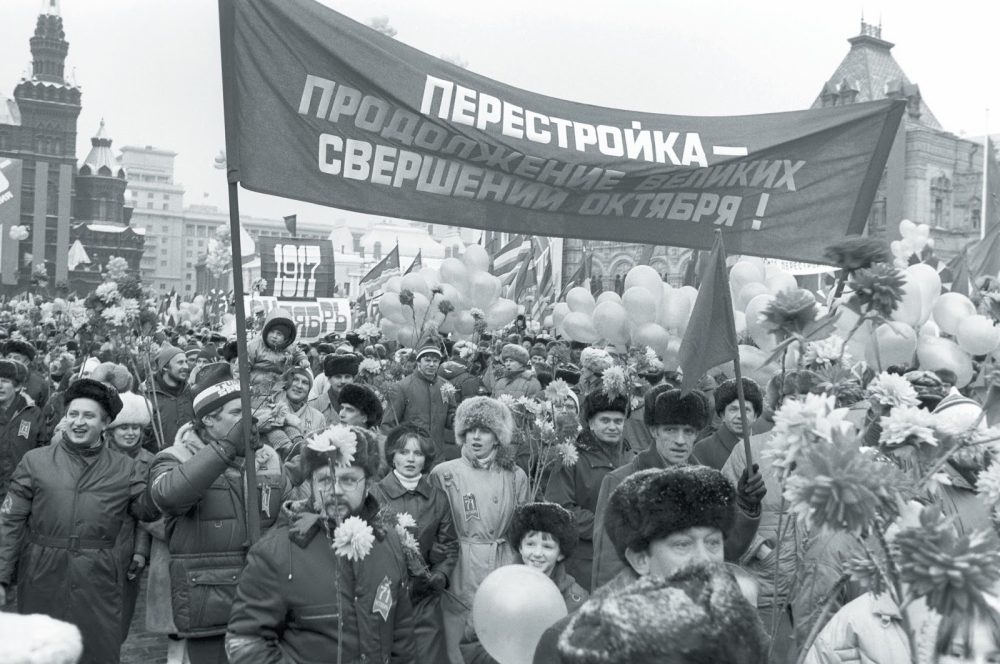
Under Gorbachev the era would be officially branded "stagnation," and Brezhnev's name would be removed from maps and streets. But nostalgia for those years is alive to this day — and that too is a fact that honest history must take into account.
Frequently asked questions
Who was Leonid Brezhnev? The leader of the USSR from 1964 to 1982, General Secretary of the Communist Party. He ruled for 18 years — longer than anyone but Stalin.
What was the era of stagnation? The name given under Gorbachev to the Brezhnev years: a slowing economy, abandoned reforms, ageing leadership and corruption — behind a facade of stability and rising living standards.
What was the Brezhnev Doctrine? The principle that the USSR had the right to intervene in socialist countries where "socialism was under threat." It was used to justify crushing Prague in 1968 and invading Afghanistan in 1979.
Why did Brezhnev have so many medals? A passion for awards was his weakness: Marshal, four times Hero of the Soviet Union, the Order of Victory (posthumously revoked) and even the Lenin Prize for Literature for ghostwritten memoirs. It became the great theme of the era's jokes.
How did Brezhnev die? On 10 November 1982, after a long illness. He was buried by the Kremlin wall; the KGB chief Yuri Andropov succeeded him.
Related
- Nikita Khrushchev — the mentor Brezhnev unseated.
- The Cold War — from détente to Afghanistan.
- Andrei Sakharov — the most famous dissident, exiled under Brezhnev.
- Shortages and queues — the reverse side of "stability."
Sources
The facts in this article can be verified against authoritative sources:
- Encyclopædia Britannica, "Leonid Brezhnev": https://www.britannica.com/biography/Leonid-Ilich-Brezhnev
- Encyclopædia Britannica, "Soviet Union: The Brezhnev era": https://www.britannica.com/place/Soviet-Union/The-Brezhnev-era
- Wikipedia, "Leonid Brezhnev": https://en.wikipedia.org/wiki/Leonid_Brezhnev
- Alpha History, "Leonid Brezhnev": https://alphahistory.com/coldwar/leonid-brezhnev/
- EBSCO Research Starters, "Leonid Brezhnev": https://www.ebsco.com/research-starters/history/leonid-brezhnev
Where assessments differ (stability or stagnation), we give both positions rather than one.